
How Long Does It Take to Build a Custom Home? A Complete Timeline & What to Expect
Written by Kelsie Michelson, Chief Operating Officer

A custom home is more than just a construction project; it’s a space where your life will unfold for years to come. Because of that, the timeline matters, but it’s only one part of the process. With the right planning and the right team, building your home can be predictable and smooth. We’ll walk you through the typical stages of a custom build, what can affect timing, and how to keep things moving efficiently so you know what to expect as you embark on a journey to build your custom home.
What Factors Impact the Timeline of Building a Custom Home?
The size and complexity of your project play a major role. Larger homes or those with intricate layouts, multi-level structures, or highly customized finishes naturally require more time. For example, a mid-sized custom home (around 2,500–3,500 square feet) with a straightforward layout and standard structural engineering typically takes eight to twelve months of construction time. A larger home (4,500+ square feet) with features like steel beam spans, expansive window walls, walk-out basements, complex rooflines, or extensive custom millwork can extend construction closer to twelve to eighteen months, depending on site conditions and finish selections.
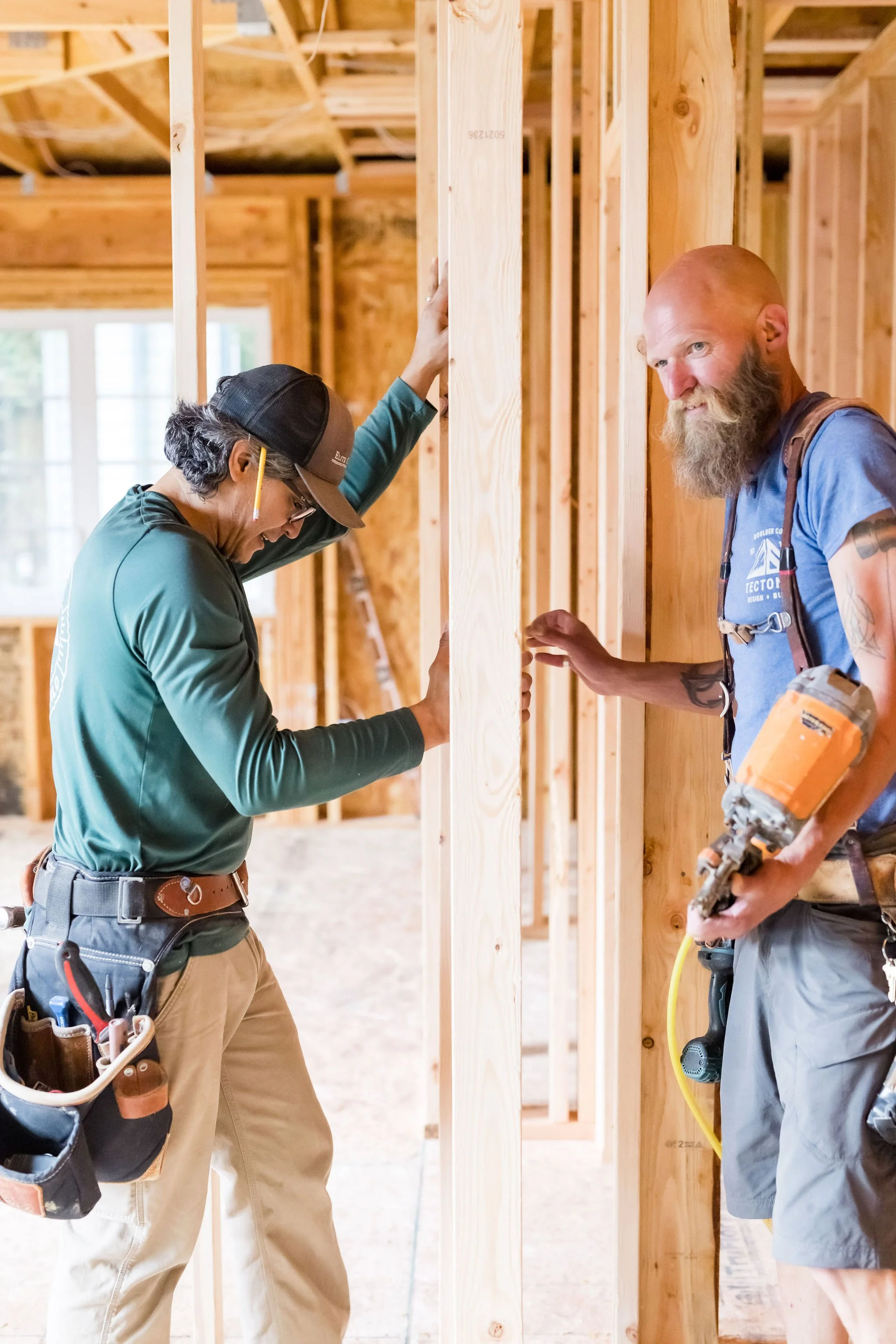
Construction usually takes around twelve months, possibly more depending on the size of the home.
The site itself also matters. Flat, easily accessible lots are straightforward. Steep slopes, rocky soil, or properties with environmental restrictions present more complex problems. These require additional preparation and engineering, which can extend the schedule.
Because a custom home is already a complex puzzle, we won’t discuss in great detail every factor that can impact your timeline–but they’re important to know. Some of the primary factors to know include:
Permitting and zoning
Subcontractor scheduling
Inspections
Coordination with utility companies
Material logistics
Weather
A design-build firm’s job is to manage the logistical headaches associated with building a custom home, but there are two things that you as the owner have full control over as it relates to timelines:
Decision speed when choosing materials for your new home. (Because we want to order to get this material to your home!)
Changing your mind once work has started. (Your input matters most of all, but hearing, “Can we move this wall?” after it’s been built requires pausing, new plans, re-ordering, and then back to work.)
Typical Timeline Range
Every custom home is unique, but the timeline becomes much more predictable when design and construction are integrated from the beginning. With our design build process at Tectonic, architects, designers, project managers, and builders collaborate from day one. That early alignment significantly reduces redesigns, miscommunication, and costly mid-project adjustments that often extend timelines in traditional construction models.

Our design-build process keeps everything under one roof, decreasing time and budget overruns.
Discovery & Design Phase
The process begins with a discovery and design phase that typically lasts one to three months, depending on the scope and complexity of the home. During this time, we listen carefully to your goals and shape a design that balances aesthetics, function, energy performance, and construction feasibility. Because our architect and build team work side by side, decisions are evaluated in real time for cost, constructability, and long-term performance. This eliminates the common scenario where beautiful plans must later be reworked to meet budget or structural requirements.
Pre-Construction Phase
Once the design is refined and the budget is established, permitting and pre-construction preparation begin. This phase often overlaps with final design detailing and generally takes one to three months, depending on municipal approvals and site conditions. Our team proactively manages submissions, engineering coordination, and documentation to keep this stage moving efficiently and avoid unnecessary delays.
Construction Phase
Construction typically takes six to twelve months, depending on the size, level of customization, and site complexity. Because our project managers, trade partners, and design team are aligned from the outset, the build phase moves with clarity and precision. Timelines, logistics, and sequencing are actively managed using a streamlined system that prioritizes efficiency without sacrificing craftsmanship.
Finalization Phase
The final weeks of a project focus on finishing details and inspections. Rather than scrambling to correct issues, this stage is a thoughtful refinement process. Every Tectonic project is backed by a two-year workmanship warranty, reinforcing our commitment to quality and long-term performance.
In total, most custom homes take approximately eight to eighteen months from initial design conversations to move-in. While every project differs, an integrated design-build approach creates a far more predictable experience, allowing you to plan with confidence and enjoy the process along the way.
Common Delays & How to Avoid Them
Even with careful planning, delays can happen. Material availability is one of the most common causes, especially when projects include specialty items such as large-format high-performance windows, or specialty natural stone like quartzite or marble slabs. These materials often involve longer manufacturing timelines, overseas sourcing, or precise fabrication. Without early coordination, they can slow a project significantly. That’s why evaluating selections during the design phase and aligning them with procurement schedules is essential to keeping construction moving smoothly.
Changes to the scope of work during construction can also extend a timeline: adjustments often affect multiple trades and sequencing. In traditional construction models, design decisions are sometimes finalized after pricing, leading to revisions once building has already begun. Our integrated design-build approach prevents that disconnect. Design, budgeting, and construction feasibility are aligned before we break ground, which minimizes costly redesigns and keeps momentum strong.
Unexpected site challenges, such as soil conditions or drainage issues, may slow excavation or foundation work. That is why we prioritize thorough site analysis and engineering coordination early in the process. Permitting or inspection delays can also occur, particularly in areas with detailed regulatory requirements. An experienced local team that understands the approval process can anticipate documentation needs, communicate proactively with municipalities, and navigate potential bottlenecks efficiently.
How to Keep Your Build Moving with Confidence
Keeping your build on track comes down to a few simple things. Make decisions early, try not to revisit them once construction starts, and stay in close communication with your team. The biggest slowdowns usually happen when selections drag out or when changes are made after work is already underway. If your architect, designer, and builder are working together from day one, a lot of those issues are prevented before they even start. From there, it’s really about being responsive when approvals are needed and trusting the process you’ve put in place. When everyone is aligned and moving forward together, the timeline feels far more manageable and predictable.
Performance Without Compromise
Timelines are not just about speed. They are about alignment, transparency, and thoughtful execution. At Tectonic, our process unifies architecture, interior design, project management, and construction into one seamless process. This eliminates the friction commonly found at traditional construction firms.
Building a custom home should feel transformational, not overwhelming. When design and construction work together from day one, the experience becomes clear, collaborative, and deeply rewarding. With the right team guiding the process, your timeline becomes something you understand, trust, and plan for with confidence.
About the Author
Kelsie Michelson brings over a decade of operations management experience, providing a strategic, systems-driven approach to every project at Tectonic. As co-owner and COO, she built the company's proprietary process for seamless collaboration, transparency, and accountability, and has shaped Tectonic's minimal, modern, and earthy brand identity. Committed to community and culture, Kelsie fosters local connections and cultivates an environment of authenticity and continual growth throughout the Boulder community.