What Are the Best Exterior Finishes Your Home May Actually Need
Written by Jeremy Smith, Architect
You know that moment when you start really looking at houses? Not just driving past them, but actually noticing what they're wearing. One block in Boulder has a cedar-clad modern next to a stucco bungalow next to something in fiber cement that you genuinely can't tell isn't wood. It looks like a style choice, and it partly is. It's also doing structural work: shedding water, absorbing UV, holding up through freeze-thaw cycles, and determining how much maintenance you're looking at 15 years from now.
Most of our clients don't think about any of this until they're standing in front of a wall of material samples. There's no reason you'd already know the difference between three-coat stucco and a synthetic system, or why fiber cement needs different fasteners than wood. That's what we're here for: to guide you toward choices that work for your home's orientation, your site, and what you actually need from the finished product. Made early, as part of our design process, it stops being a stack of unknowns and starts being a few real decisions.
What Are the Best Exterior Finishes for Homes in Colorado?
Short answer: it depends. Here's why.
The sun is more intense up here than most people expect. Winters are dry, summers can bring heavy rain, and the temperature can swing 40 degrees between morning and afternoon. In parts of the Front Range, wildfire risk is real, too. A finish that looks gorgeous in a Pacific Northwest catalog might warp, fade, or crack within a few seasons here.
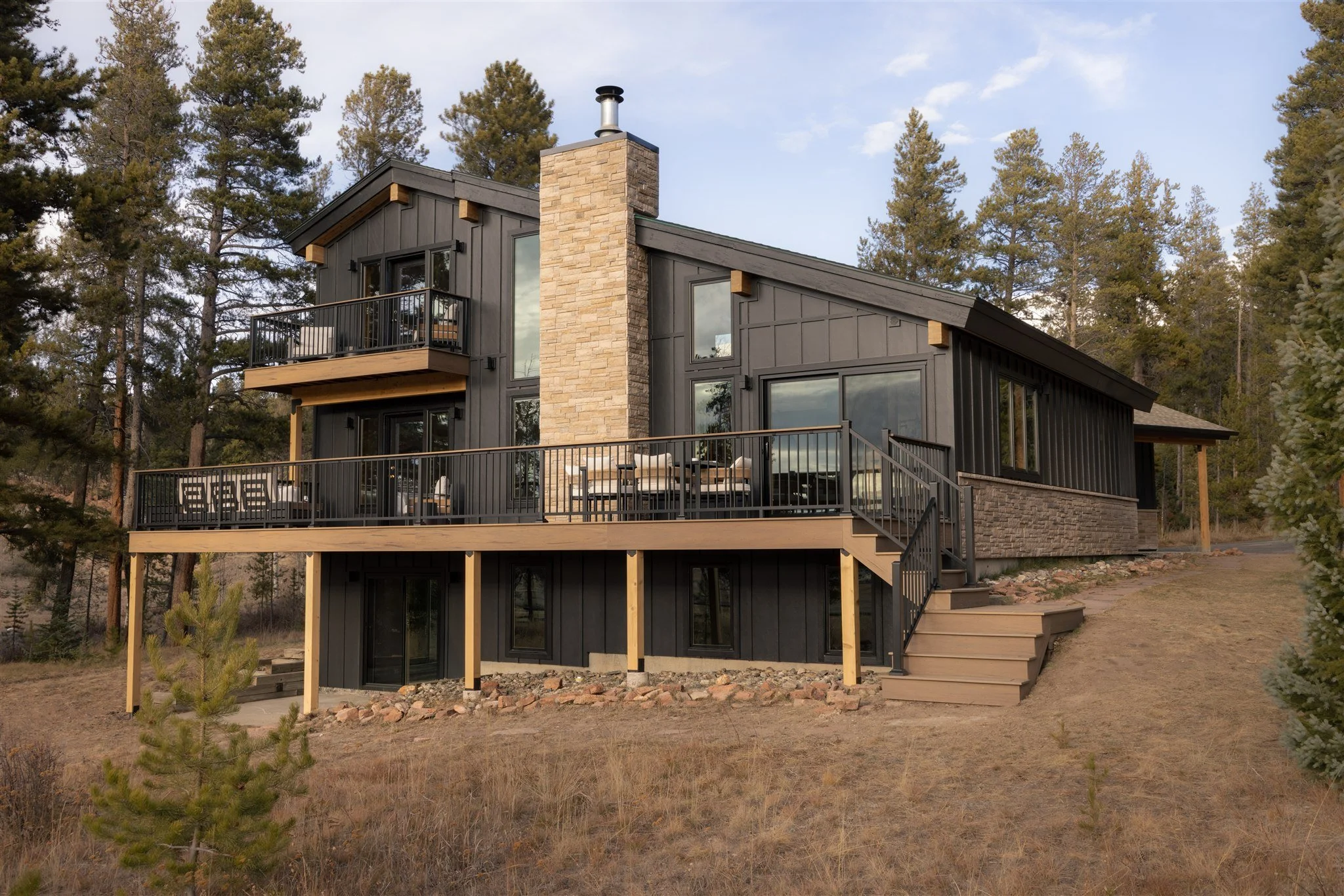
The exterior finishes we work with most often are fiber cement, stucco, stone, and wood. Each one has a place. The best-designed homes usually pull from two or three, layered intentionally to break up massing, highlight architectural details, and respond to how the building actually sits on its site. (You can see what that looks like in practice on one of our modern mountain builds.)
This is also where wood framing for the house quietly enters the conversation, even though no one ever sees it once the walls go up. The frame is what holds everything together, and every finish material loads it differently. If the structure underneath can't carry the weight of stone, wasn't planned for the thickness of stucco, or lacks the right sheathing for fiber cement, even the most beautiful finish will fail early. Our team at Tectonic Design Build thinks about framing and finishing together, not as separate phases.
In short, the best exterior finishes for Colorado homes are:
Fiber cement siding because it looks like wood, performs like masonry, and barely asks for maintenance.
Natural wood siding because real cedar and shou sugi ban bring a warmth our clients consistently say was worth the upkeep.
Acrylic or synthetic stucco because it handles Colorado's seasons well and holds its color far longer than traditional systems.
Natural stone and brick because nothing else ages as gracefully in this climate.
Is Fiber Cement Siding Really Worth All the Hype?
For a lot of our clients, yes. Fiber cement siding has earned its spot for good reasons.
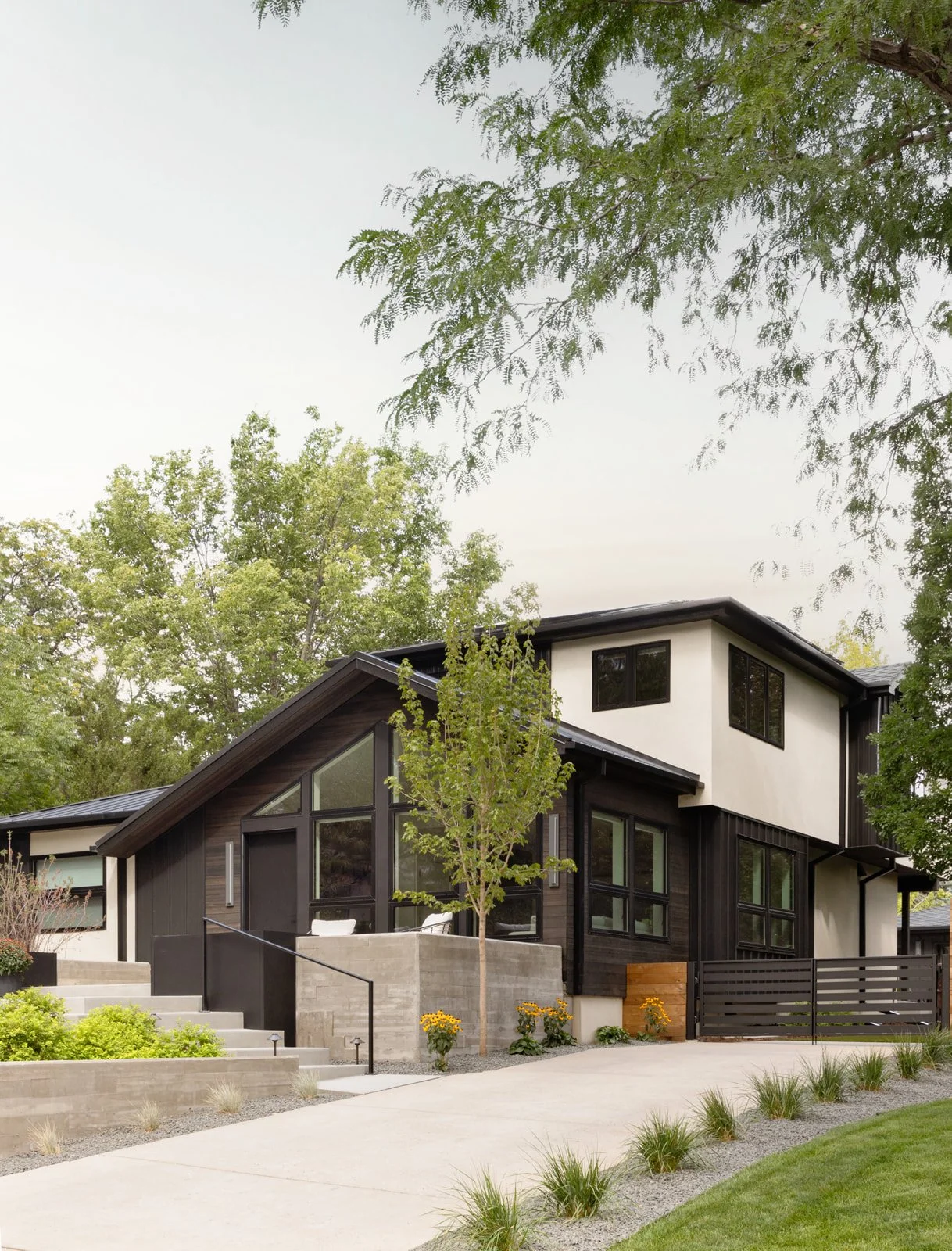
It's a composite of cement, sand, and cellulose fibers pressed into planks or panels. The result is a material that looks remarkably like wood, deep grain texture and all, but performs more like masonry. It doesn't rot, it's non-combustible, which matters in wildfire-prone areas of the Front Range, and it also holds paint far longer than wood, which means fewer maintenance weekends down the road. It’s all part of how we think about sustainable building.
The tradeoffs are real, however. Fiber cement is heavier than wood, so installation has to be done right, or sagging and improperly fastened panels show up later as wavy lines on a wall. It also expands and contracts with temperature, so caulking and detailing at seams matter quite a bit. The performance you read about on a spec sheet only shows up when the installation matches it, which is why we pay close attention to how our crews detail every seam and fastener.
What About Stucco for Houses. Does It Still Hold Up?
Stucco has been used across the American West for centuries, and there's a reason it sticks around. Mixed and applied well, it's tough, breathable, and ages beautifully. Done poorly, it cracks, traps moisture, and turns into a recurring headache.
The version most new homes use isn't traditional three-coat stucco. It's often a synthetic acrylic finish, sometimes called EIFS, or a "one-coat" system. The difference lies in how they behave. Traditional stucco is more forgiving with moisture. Synthetic systems offer more color stability and design flexibility. Neither is automatically the right call. The site, the wall assembly, and the architectural style usually decide it.
The piece nobody talks about enough is what's behind the stucco. Drainage planes, weather-resistant barriers, proper flashing at every window and penetration. Those are what separate a stucco wall that lasts 50 years from one that needs a tear-off at year 15. We've walked through too many remodels where the previous stucco job looked fine on the surface and was hiding rotted sheathing underneath. That kind of hidden damage is one of the more avoidable reasons remodels end up taking longer than anyone planned.
What Makes Natural Stone and Wood Worth Considering?
There's a reason these two keep showing up on the homes people remember. Natural stone brings a weight and permanence you can feel immediately. It's one of those materials where photos don't do it justice because so much of its appeal is physical. It weathers well in Colorado's climate, holds up against UV and moisture, and develops character over time rather than showing its age. On hillside or walkout sites, stone siding for houses where the lower walls need real grounding does more than look good. It anchors the structure visually to the landscape, which is part of why it feels so right on Front Range builds.
Wood is a different story, but just as compelling. Cedar, for example, is naturally resistant to moisture and insects, and it brings a warmth that's hard to replicate with composites. Shou sugi ban, a Japanese technique of charring the wood surface, takes that a step further by creating a finish that's more durable, more fire-resistant, and gives the wood a finish you don't see very often. The tradeoff with any natural wood is maintenance. It needs to be sealed, stained, or treated on a schedule, and ignoring that schedule shortens its life considerably. That's not something you have to track or figure out on your own. Tectonic offers ongoing maintenance support so your home stays protected, and before you commit to any material, we'll walk you through exactly what caring for it looks like.
How Our Team Pulls It All Together
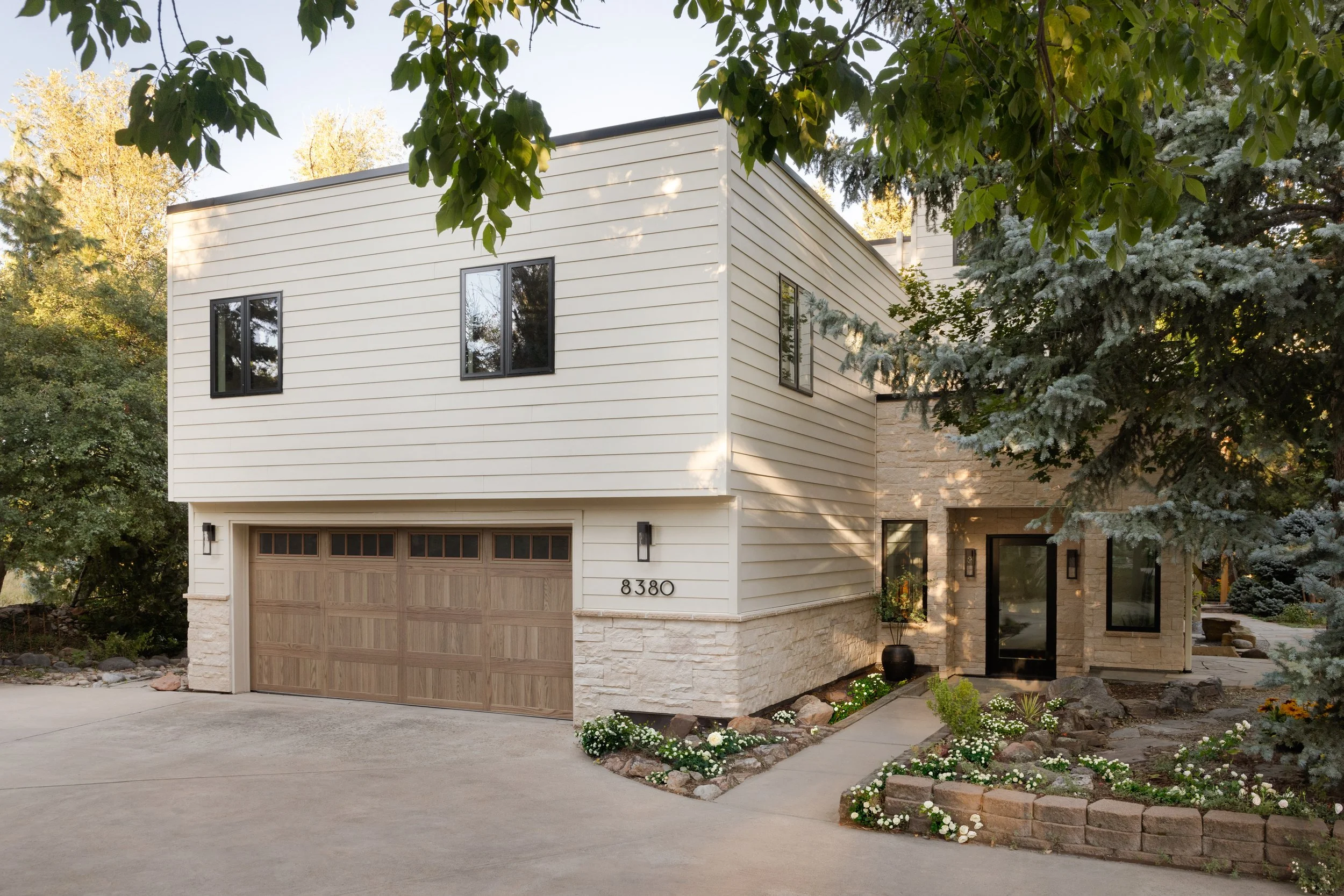
Layering finishes means more decisions, more transitions, and more places where things have to be detailed correctly. Different materials each bring a different thickness. They meet each other in ways that need flashing, reveals, or trim. Some are heavier than others and need framing adjustments before a single nail goes in. This is exactly the kind of coordination problem that gets messy when an architect designs in isolation, a builder prices it later, and a third party gets handed the install drawings cold.
Our integrated design and build process folds all of this together from the first conversation until our final walkthrough. When the project stays under one roof, so does the communication. With something as important as exterior finishes, knowing that the people choosing the materials are talking directly to the people installing them matters. That's what a design-build firm actually looks like in practice.
If you're starting to think through finishes for your own home, we'd love to talk. Let's connect!
About the Author
Jeremy Smith is a licensed residential architect at Tectonic Design Build with over 13 years of experience in high-end remodels, structural additions, and custom new construction across Colorado’s Front Range. Having begun his career in direct hands-on construction, Jeremy bridges technical field execution with innovative, functional architectural design. Jeremy is certified with The American Institute of Architects (AIA).