What Actually Happens During the Architectural Design Process? Here’s How Your Home Gets Built.
Written by Jeremy Smith, Architect

Most homeowners walk into a design-build project without a clear picture of what's actually going to happen. That uncertainty creates unnecessary stress around the process and the budget. As a design-build firm, we handle everything under one roof. Planning, development, construction, and design (plus all of the more quiet details you may never see) are all handled by our team.
Let’s get into each phase of the architectural design process, from our first meeting to your finished home. By the end, you’ll see why a unified design-build approach changes everything.
The Architecture Design Process, Start to Finish
Most architects break their work into four or five phases. The names vary, but the structure is similar. (You can see the standard version laid out by the American Institute of Architects.) Where we differ is in our process itself. We've broken it into nine steps. Here's how it works.
1. Discovery
Before anything gets designed, we sit down together. In that first meeting, we learn about your project, your budget, your home, and your goals, then put together a design proposal with a construction cost estimate. If you decide to move forward, you know exactly what to expect. No surprises, no guesswork.
2. Conceptual
This is the first stage of design where we gather the inspiration and details of your vision. We take measurements, send a design questionnaire, pull together inspiration imagery, and produce 2D spatial layouts of the space along with a conceptual estimate. We also do an early home integrity inspection to understand what we're working with beneath the surface.
3. Development
The deep dive. Every interior detail gets pinned down, including items, colors, and specifications. Floor plans also get refined. We build out a 3D experience so you can walk through the space before it exists. By the end of this phase, the design is nearly ready for construction.
4. Final Design
Everything comes together: the full plan set, renders, mood boards, the final budget, and the build contract. We prepare the plans for city permitting and complete the full scope of work and build the construction schedule. Once you sign the build contract, we're ready to start.
5. Mobilization
Most builders skip past this step, and it's why their projects slow down later. Before construction starts, there's a month-long preparation process: pre-ordering materials, pulling permits, notifying neighbors, finalizing the schedule, and getting the site ready. If you're staying elsewhere during the remodel, this is when you'd move out. By the time we break ground, the surprises that derail other projects have already been handled.
6. Deconstruction & Break Ground
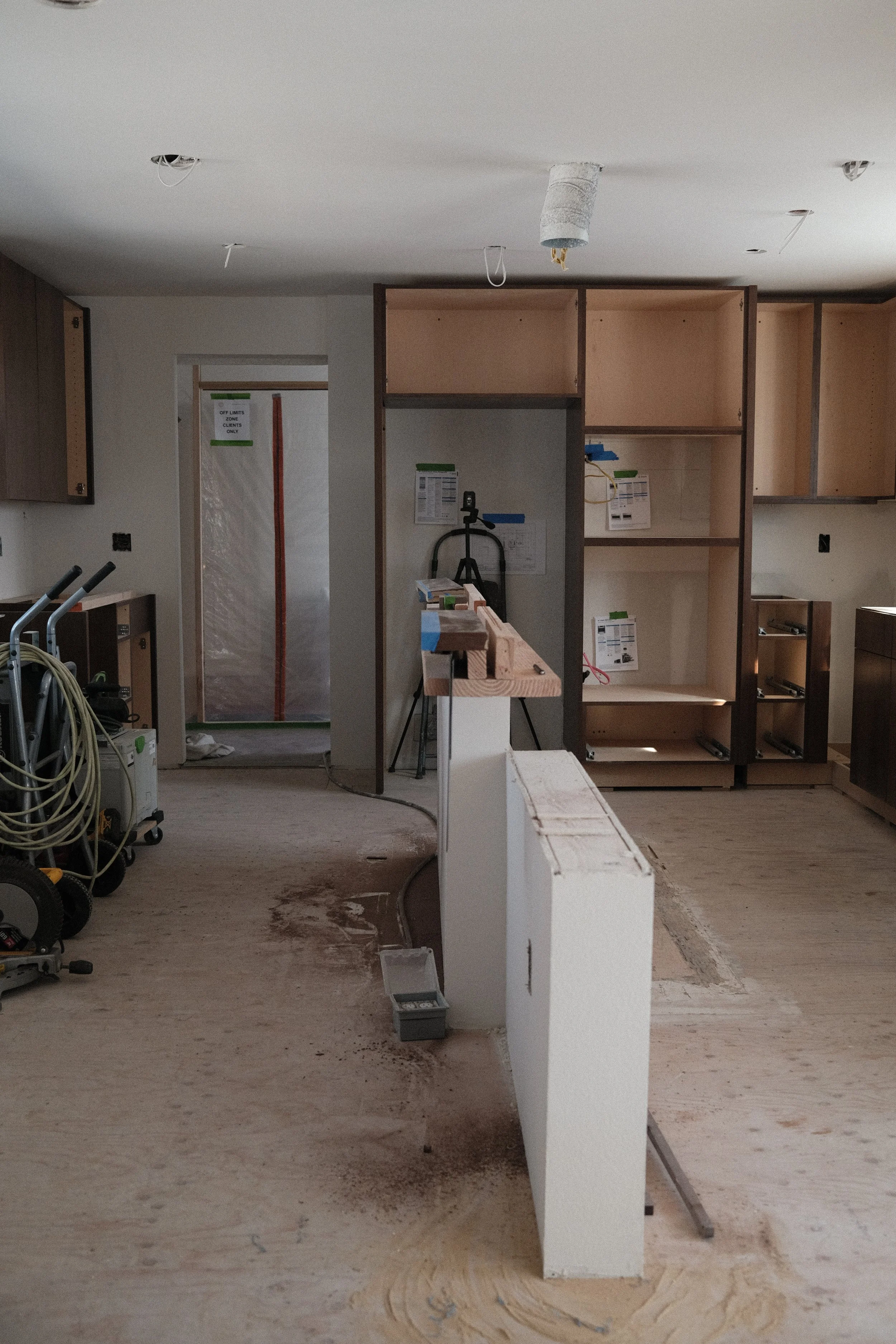
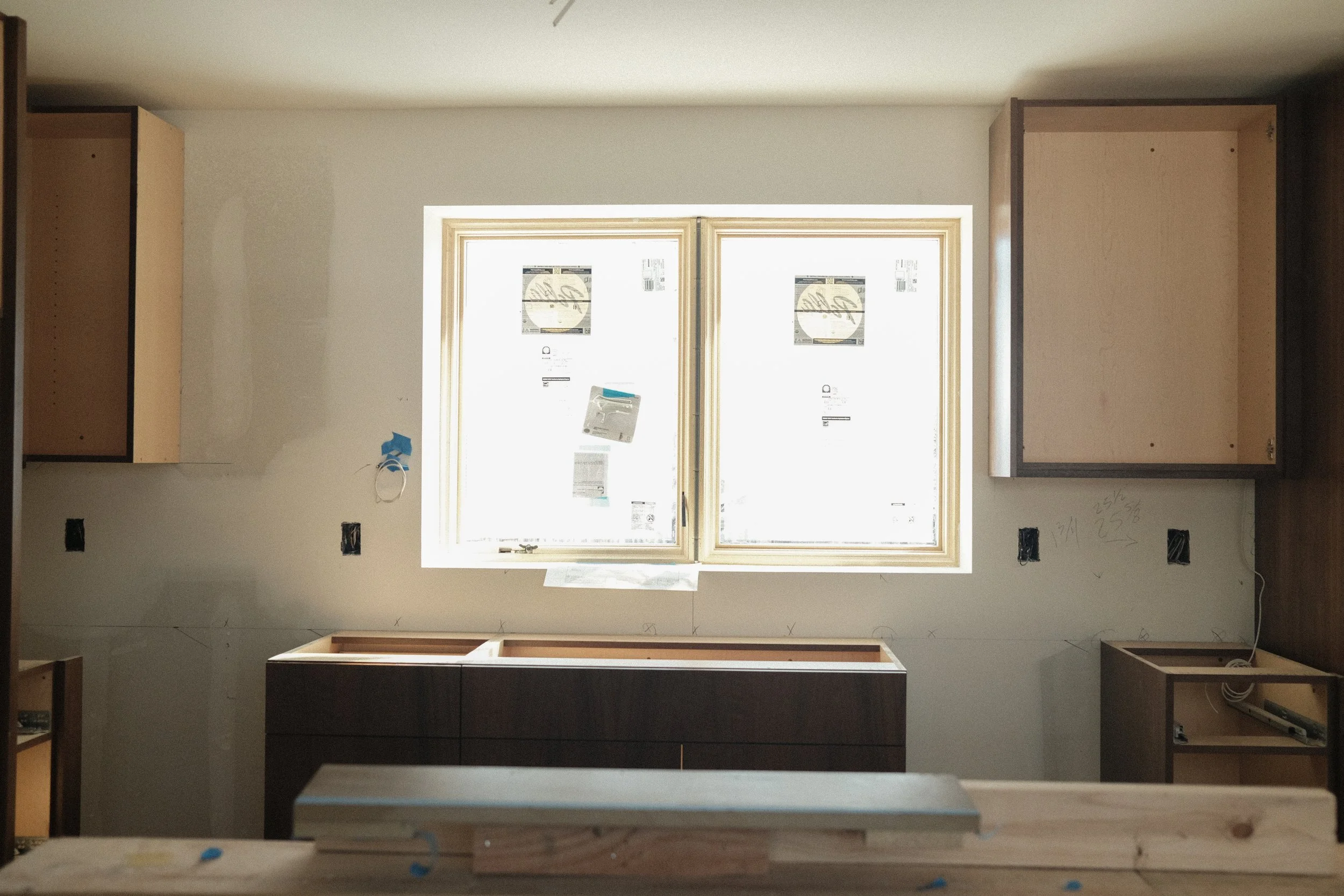
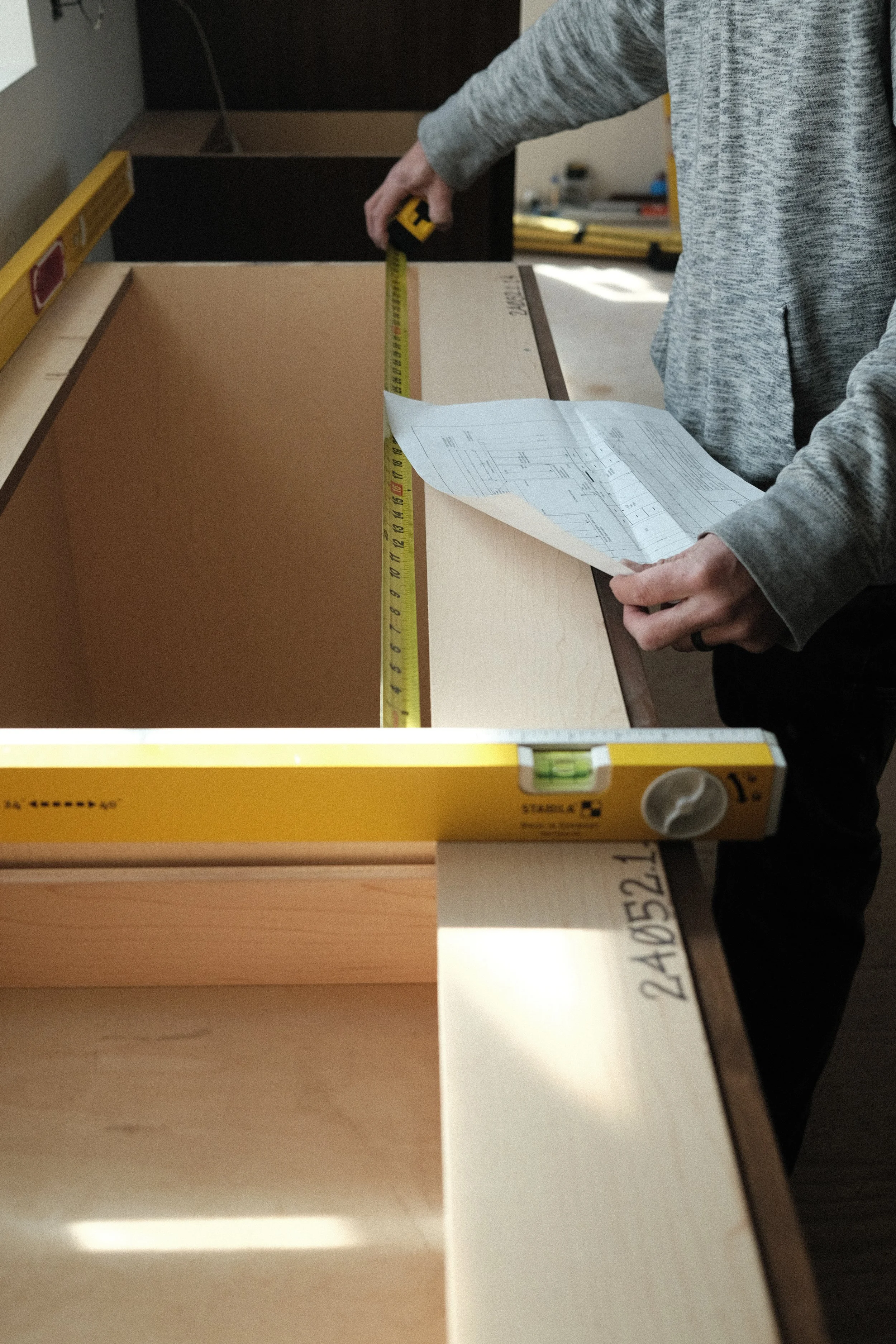
For remodels, this is where we carefully deconstruct what needs to go. We protect what stays, upcycle materials where we can, and do a second home integrity inspection once the walls are open. For new builds, this is when we break ground and lay the foundation.
7. Frame Work
With the structure open and ready, we install the rough-ins, the core bones of the home. Framing, electrical, plumbing, and mechanical systems all go in before any drywall goes on.
8. Install Finishes
Now comes the visible work: tile, flooring, cabinetry, countertops, and appliances. The construction site starts looking like the home you designed. This is the phase where it really starts to feel real.
9. Project Close-Out & Wrap
The final and most satisfying step. We walk through every inch of your new home together, working through the punch list, handling final cleaning, and handing over a project binder with all warranty and care information for your new space.
If you want a deeper look at how design philosophies shape these phases, our piece on contemporary architecture walks through the aesthetic and structural choices that define a lot of modern homes.
Want to see exactly how we move through each of these phases? Explore our full process here.
The Case for Keeping Your Home Build Under One Firm
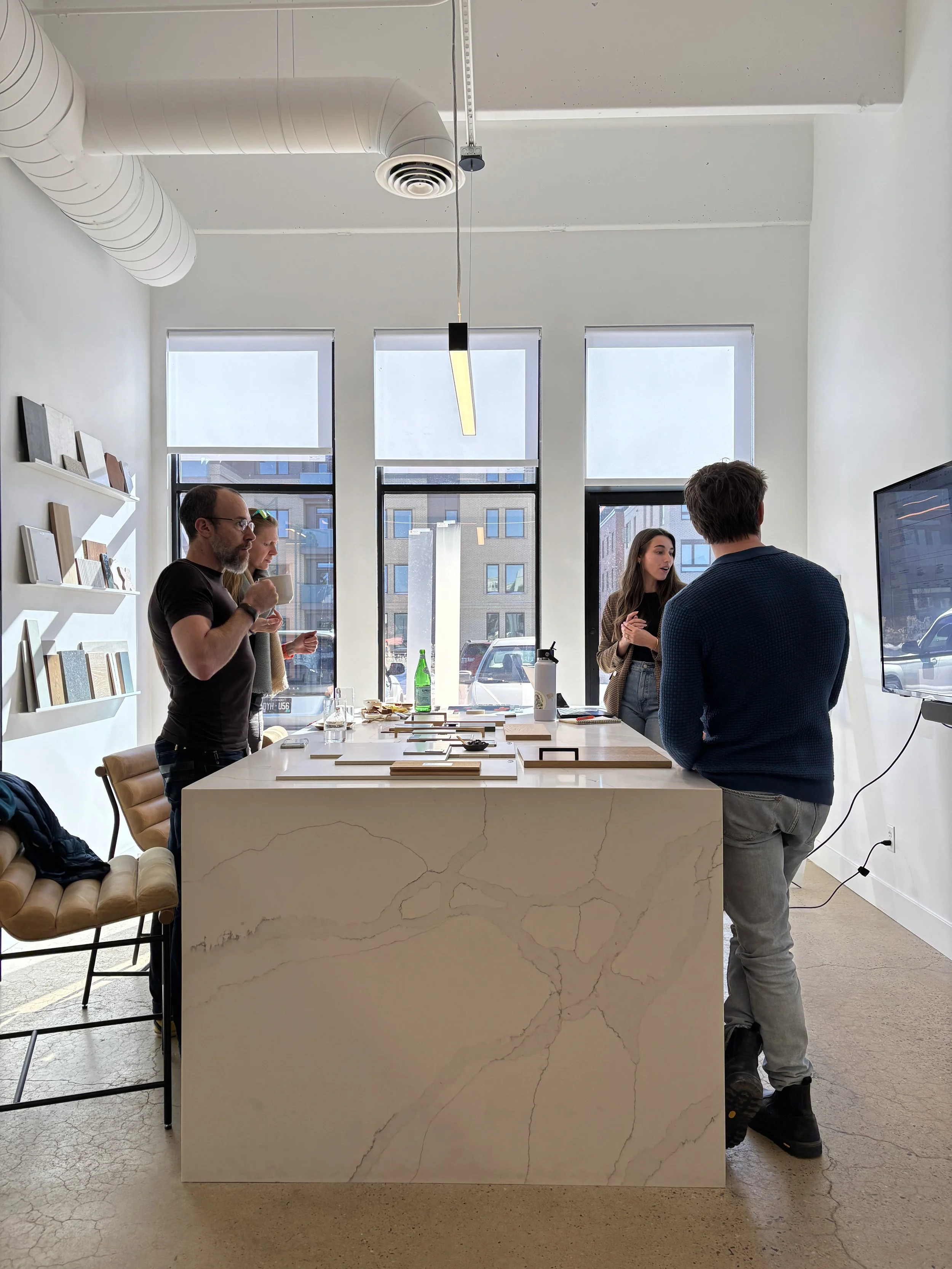
Most homeowners don't know who to call when something goes wrong mid-build. The architect says it's a construction problem. The contractor says it's a design problem. And you're standing in the middle, paying for both of them to blame each other.
That's the traditional model. It's how most projects are structured, and it's why most projects are stressful. As one industry veteran put it, "small mistakes loom large later in the process." A wall that was supposed to be load-bearing turns out not to be. A window dimension is off by an inch. The architect is gone, the builder is improvising, and you find out three weeks later when something doesn't look right.
With us, our architects, interior designers, and builders are part of the same team from your first meeting to the end of your project.
Research from the Design-Build Institute of America consistently shows this integrated approach produces faster timelines and fewer cost overruns than the separate-contracts model. But the number that matters more to most homeowners isn't in a study. It's the one on the contract. And when your architect, production director, and interior designer are all in the same room, that number stays honest. Every decision that should have been made on paper gets confirmed before it has to be made on a job site, where it costs far more to fix.
What a Good Architecture Design Process Feels Like
A good process starts and ends with listening. If we don’t fully understand how you live beforehand, and then understand how you envision life after your home build, then how can we design and build the best home possible for you and your family?
By keeping everything under one design-build firm, you don’t become the default messenger between architects, construction crews, and designers. In fact, you can actually enjoy the whole experience because we do all of that for you. And if laying out our process above isn’t transparent enough, we’ll walk you through step by step during our consultation.
Your job is to tell us how you want to live. Ours is everything else.
About the Author
Jeremy Smith is a licensed residential architect at Tectonic Design Build with over 13 years of experience in high-end remodels, structural additions, and custom new construction across Colorado’s Front Range. Having begun his career in direct hands-on construction, Jeremy bridges technical field execution with innovative, functional architectural design. Jeremy is certified with The American Institute of Architects (AIA).