Written by Dylan Ochala, CEO & Founder
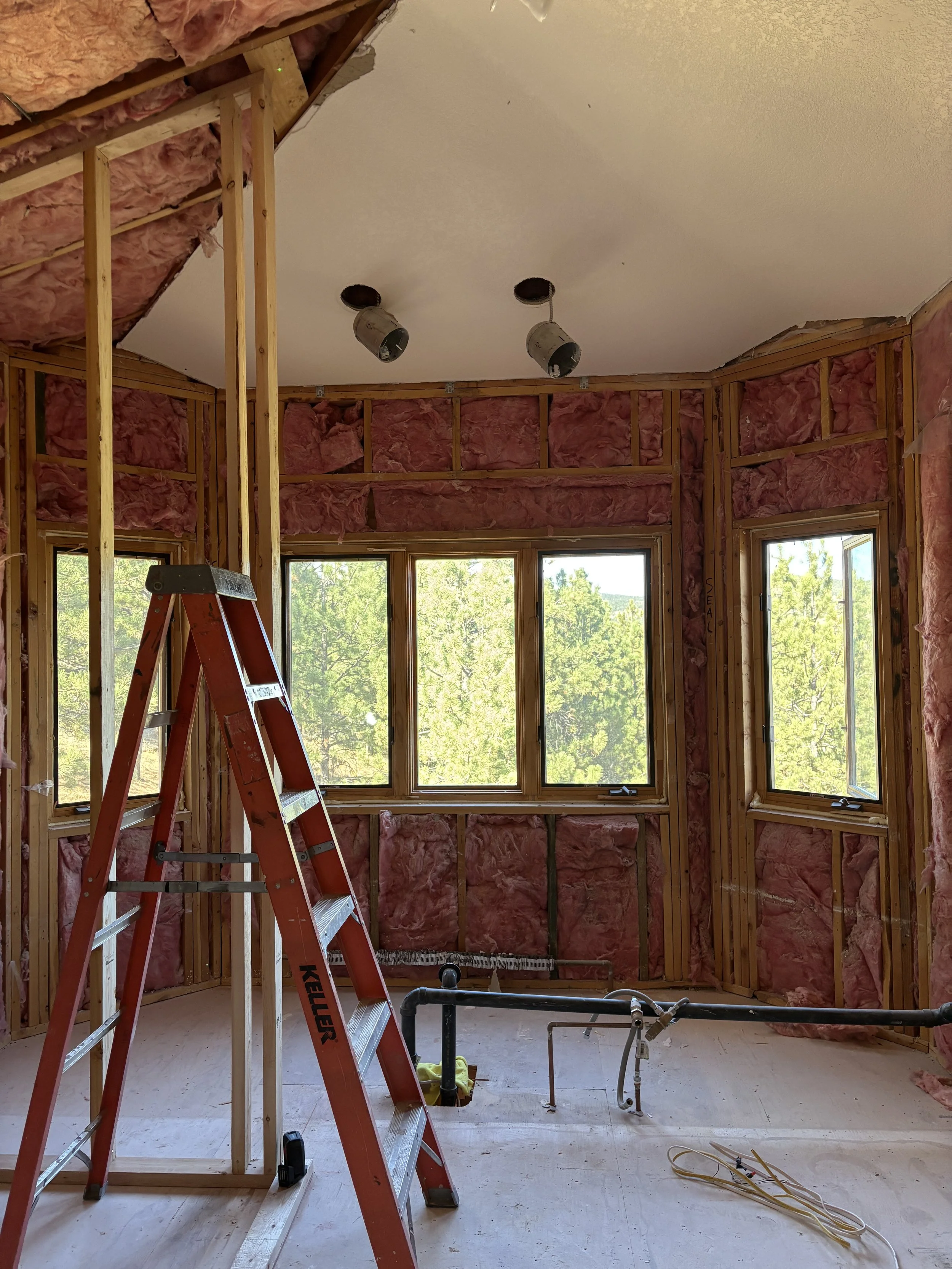
Every house has one. The bedroom where an extra blanket lives at the foot of the bed all winter. The upstairs office that's unusable by 3 p.m. in July. The list goes on and on, and you may even be in one of these rooms right now reading this. Believe us or not, but the answer is sitting inside your walls.
Insulation is one of those things nobody sees once the drywall goes up, and often overlooked during the design process. It's easy to spend three weeks choosing tile and five minutes on what's behind it. In Colorado, though, what's in your walls and attic decides how your home feels every day, what it costs to run, and how well it holds up through decades of freeze-thaw.
When you're building new, you can get this right from day one. So what's the best insulation?
Short answer: there isn't one. The best-performing homes take a systematic approach to designing the home's thermal layer.
On most Front Range builds, a continuous exterior insulation is a great approach, paired with insulation within the walls. All of it gets carefully air-sealed, because even great insulation underperforms when air is leaking around it.
What Does Insulation Actually Have To Do In a Colorado Home?
Up here, your house is up against a lot. Winter nights drop well below freezing, the high-altitude sun bakes walls all summer, and a 40-degree swing in one day isn't unusual. Insulation slows heat moving in and out, so your house stays comfortable without your furnace and AC running nonstop. Keeping a home warm in cold weather requires more insulation as compared to keeping a home cool in summer.
Insulation can't do it alone, though. The quality of windows and doors, the thoroughness of air sealing and attention to detail around mechanical design all play a part in creating a comfortable home.
Moisture management matters, too. Indoor activities introduce moisture into the air, and if warm air leaks into cold wall or roof assemblies, condensation can form. Proper insulation, air sealing, and moisture control help protect against potential mold and wood damage. In winter, a well-insulated and air-sealed attic can also help reduce the conditions that contribute to ice dams by limiting heat loss through the roof.
The insulation needs to work with the home's air barrier, windows, framing, roof, and exterior materials to create a building envelope that performs as a whole.
What R-Value Does a New Home Need?
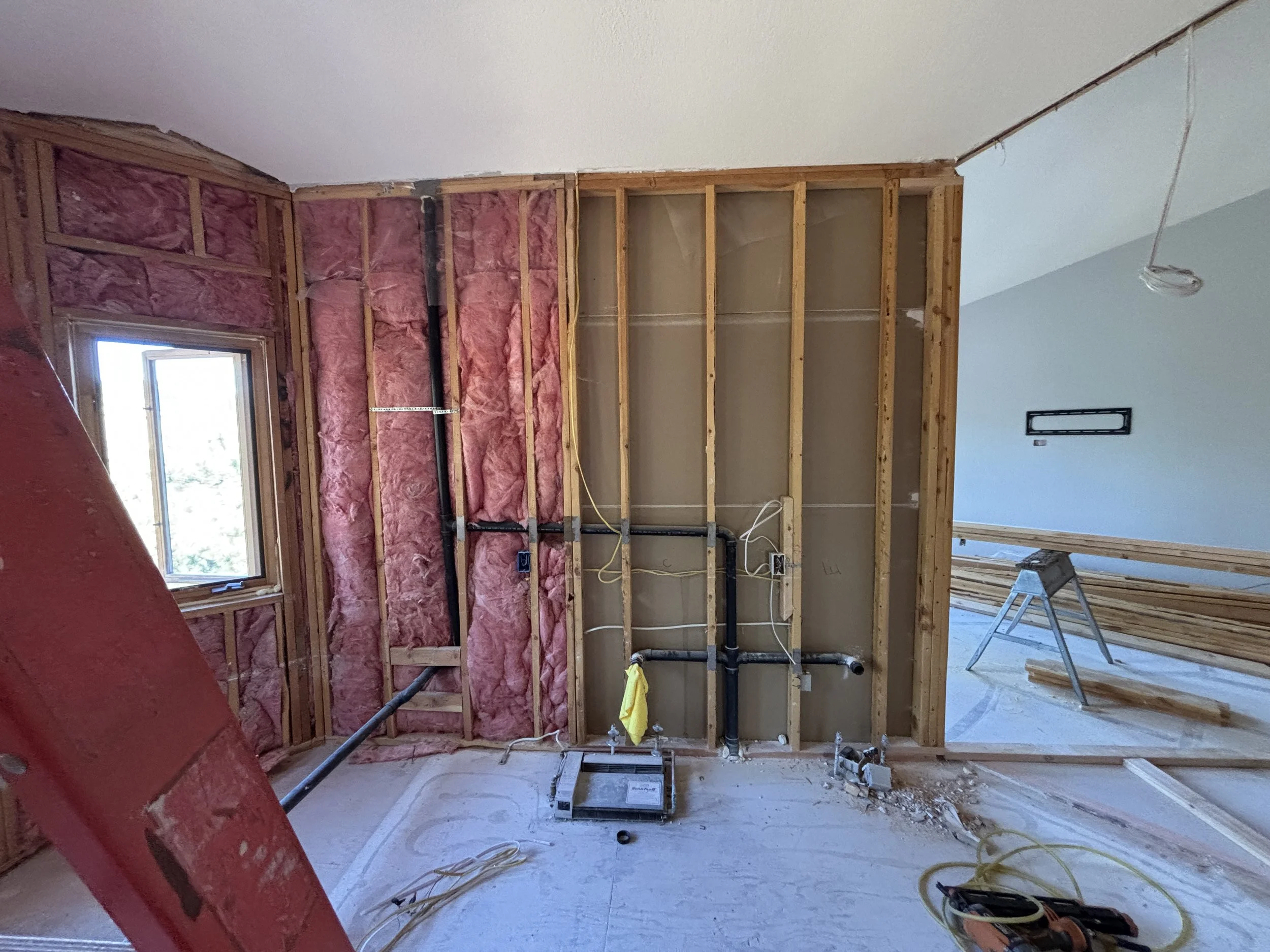
R-value measures how well insulation resists heat transfer. The higher the R-value, the greater its insulating ability. The right amount depends on your home's location, construction, and applicable building codes.
Much of Colorado's Front Range falls within IECC Climate Zone 5. Common reference requirements under the 2021 International Energy Conservation Code include R-60 for ceilings, R-20 plus R-5 continuous insulation or approved alternatives for walls, and R-30 for floors. Local codes may differ, and Boulder has its own stricter energy requirements.
You don't need to memorize these numbers. That's our job. What's worth knowing is that code is the minimum a house can legally be built to. If it fits your goals, we build toward Passive House standards.
Which Insulation Works Best in Each Part of the House?
In your attic, blown-in insulation is hard to beat. Loose fiberglass or cellulose (made mostly from recycled paper) fills in around trusses and into corners that are hard for rolls to reach. One important thing to note is that it has to go in at an even depth all the way out to the eaves or you’ll end up with cold spots on the ceiling below. In an ideal world, we can also add insulation on top of the roof, below the shingle. As a continuous insulation layer helps to mitigate what is known as thermal bridging.
In your walls, blown in insulation tends to perform the best second to batts are the pink or yellow rolls most people picture. They're affordable and do the job in open stud cavities, but only if they're cut to fit around every wire, pipe, and outlet box. Mineral wool batts cost more, but they quiet sound between rooms and hold up to fire better than most options.
The layer that makes the biggest difference sits outside the studs. Wood framing moves heat far more easily than the insulation between it, so every stud acts like a thin cold stripe running floor to ceiling. A continuous layer of rigid insulation over the sheathing covers those stripes and keeps the wall assembly warmer, which also helps keep condensation out. It's a big reason insulation choices end up affecting window depth and siding details.
At the rim joists and basement walls, we find that spray foam earns its price.
Every option has tradeoffs in cost, installation, and moisture performance. The right mix depends on how your whole house is put together and on what matters most to you. It could be lower energy bills, a quieter house, or a smaller environmental footprint. We'll walk you through those tradeoffs before anything gets ordered.
How Tectonic Pulls It All Together
Most insulation problems come from how it was installed, not what was installed. That's why we settle it during design, not on the job site. With our expertise in Passive House Design, we take those teachings and methodologies to create the best blend of high performance and affordability. Insulation affects wall thickness, window depth, siding, and even the size of your heating system, and because our architects, interior designers, and builders work as one team through every phase of our process, those decisions get made together by the people who'll carry them out.
You tell us how you want your home to feel in February and in July. We figure out what goes in the walls to get it there.
About the Author
Dylan Ochala is the Founder and CEO of Tectonic Design Build, bringing years of hands-on field craftsmanship to custom home construction and residential remodeling in Colorado. His focus centers on structural craftsmanship, site-specific integration, and building lasting client relationships through transparent execution in the field. Dylan, along with the rest of the Tectonic Build team, is Passive House Certified.